
We are New Jersey Pedestrian Accident Lawyers
Enforcing pedestrian right-of-way laws, bypassing complex PIP insurance traps, and protecting injured victims in Passaic, Bergen, and Northern New Jersey since 1922.
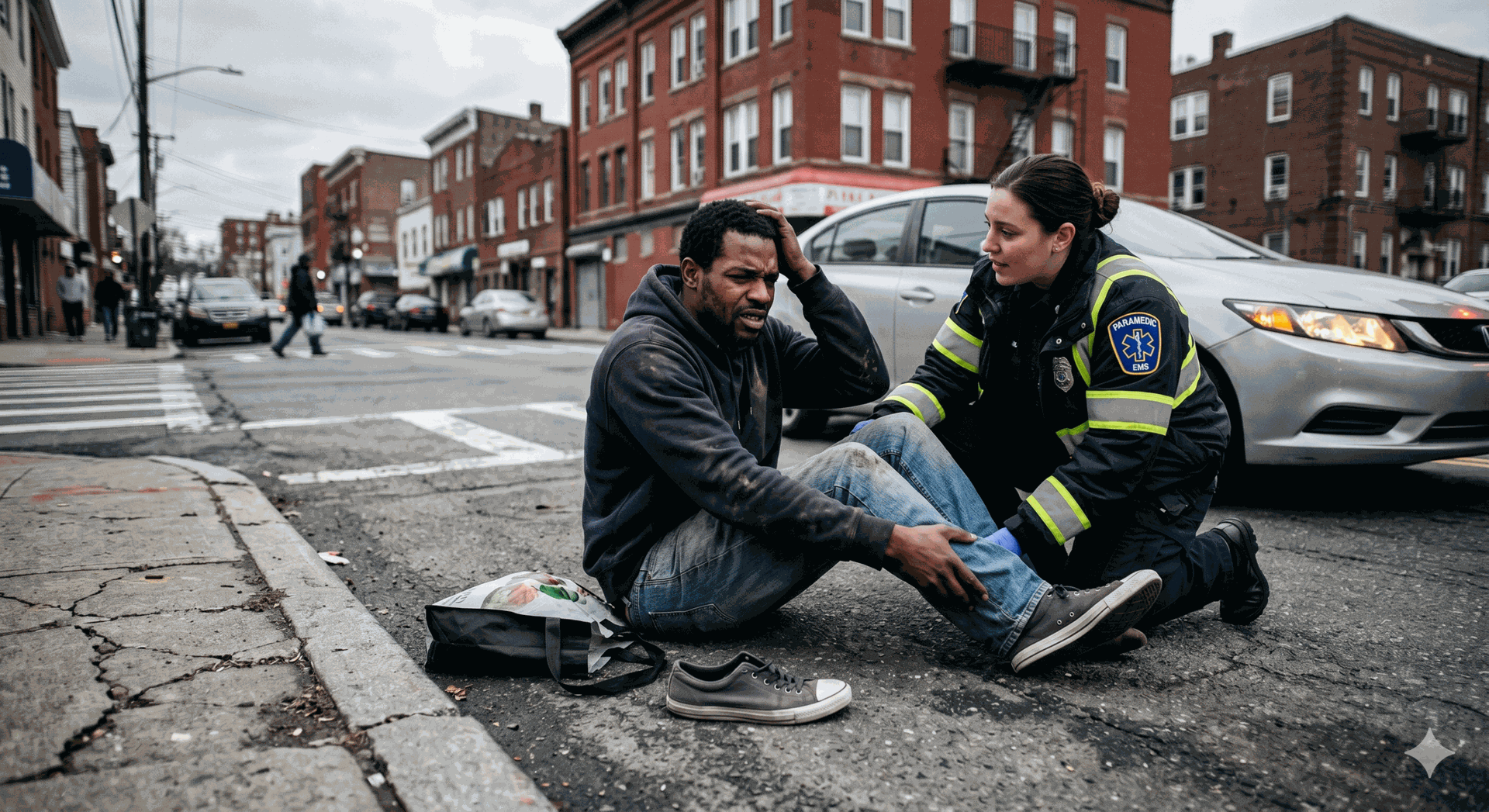
To be struck by a multi-ton passenger car, SUV, or commercial truck while walking, crossing the street, or jogging is a uniquely terrifying and catastrophic event. In a fraction of a second, the extreme physical impact can inflict devastating, life-altering injuries—leaving you to face excruciating physical pain, permanent brain damage, and an overwhelming mountain of emergency medical bills. Beyond the immediate physical trauma, pedestrian victims are frequently forced to navigate a hostile insurance system that attempts to blame them for their own injuries, claiming they were “jaywalking” or failing to keep a proper lookout.
At Raff & Raff, LLP, we have protected injured New Jersey residents and their families for over a century (1922–Present). We know that securing full financial recovery for a pedestrian accident requires decisive, immediate investigation. Led by our Managing Partner Stephen T. Raff, Esq.—recently honored as the Passaic County Bar Association’s Distinguished Lawyer of the Year— and Certified Civil Trial Attorneys Michael S. Raff, Esq. and Daniel A. Levy, Esq., our active trial team immediately goes on the offensive.
We do not let negligent drivers or corporate insurance carriers dismiss your pain or downplay the driver’s inattention. We prepare every single pedestrian strike case from day day-one as if we are presenting it to a jury—subpoenaing local municipal traffic signal logs, retrieving nearby commercial business surveillance footage, and identifying all applicable auto, commercial, and umbrella insurance policies to maximize your financial compensation.
We represent injured pedestrians strictly on a contingency fee basis under our No Recovery, No Fee Guarantee. This means you do not pay us a single dollar out-of-pocket, and we only collect a legal fee if we successfully win a financial settlement, permanent injury award, or trial verdict on your behalf.
Overcoming Complex Obstacles in New Jersey Pedestrian Accident Law
Select a category below to discover how we enforce right-of-way statutes, navigate complex medical insurance rules, and prove driver distraction:
Pedestrian Right-of-Way (N.J.S.A. 39:4-36)
Forcing Driver Accountability
New Jersey has strict traffic safety laws designed to protect vulnerable road users. Drivers have a heightened, non-delegable legal duty to remain vigilant and yield to pedestrians.
- The Law: Under N.J.S.A. 39:4-36, New Jersey enforces a “stop and yield” law. Drivers must come to a complete stop and remain stopped for a pedestrian crossing the roadway within any marked crosswalk, or within any unmarked crosswalk at an intersection. If a driver strikes you in a crosswalk, they are in violation of state law, creating a powerful foundation for your civil negligence claim.
The PIP Insurance Trap for Non-Drivers
Solving the Medical Bill Crisis
A common panic for injured pedestrians—especially children, senior citizens, or city residents who do not own a vehicle—is: “Who is responsible for paying my hospital and trauma bills?”
- The Solution: New Jersey’s “No-Fault” auto insurance rules can be highly confusing. If you are struck as a pedestrian, your own household’s auto insurance policy PIP (Personal Injury Protection) is legally responsible for paying your medical bills, even though your car was not involved. If you do not own a car or live with someone who does, the at-fault driver’s PIP coverage, or a state-mandated safety net fund (PLIGA), must cover your bills. We manage this entire process to ensure your medical care is fully funded, to the full extent of the law.
Proving Driver Distraction
Dismantling “I Didn’t See Him” Defenses
In almost every pedestrian strike, the at-fault driver tells the responding police officer, “The pedestrian stepped out of nowhere, I didn’t see them.” This is an admission of inattentive driving, not a valid legal defense.
- Our Approach: We immediately deploy investigators to preserve critical electronic evidence. We subpoena the driver’s cell phone carrier logs to prove they were texting or distracted, download commercial vehicle GPS/black-box telematics to verify their pre-impact speed, and secure local municipal traffic light timing sequences to prove they ran a red light or made an illegal turn.
Serious & Life-Altering Injuries Resulting from Pedestrian Accidents
Because a pedestrian has no steel frame, crumple zones, or airbags to absorb the kinetic energy of a moving vehicle, they bear the absolute brunt of the impact force. This routinely results in catastrophic, life-altering orthopedic and neurological trauma, including:
- Traumatic Brain Injuries (TBIs): Severe concussions, skull fractures, diffuse axonal injuries, and permanent cognitive deficits resulting from the secondary impact of the head striking the asphalt or windshield.
- Complex Orthopedic Fractures: Shattered pelvises, broken hips, compound leg fractures (such as tibia/fibula breaks), and collarbone fractures requiring complex surgical hardware or joint reconstructions.
- Spinal Cord Trauma & Paralysis: New New-Jersey herniated discs, fractured vertebrae, permanent nerve damage, and paraplegia or quadriplegia resulting from high-velocity impact.
- Severe Degloving & Road Rash: Deep-tissue friction burns, skin tearing, and permanent cosmetic scarring requiring extensive skin grafts and plastic reconstructive surgeries.
- Internal Organ Lacerations: Internal bleeding, ruptured spleens, punctured lungs, and severe thoracic trauma caused by the blunt-force impact of the vehicle’s bumper or hood.
Your Step-by-Step Action Plan After a Pedestrian Accident
- Seek Immediate Emergency Medical Care: Go to the nearest emergency department or trauma center (such as St. Joseph’s Level 1 Trauma Center in Paterson) to document your physical injuries immediately. This prevents the insurance company from claiming your injuries were caused by a prior event.
- Ensure Law Enforcement Files a Report: Call the police immediately. Make sure responding officers file an official New Jersey Police Accident Report (NJTR-1) detailing the at-fault driver’s insurance information and any traffic citations issued.
- Take High-Resolution Photos: If you or a companion are physically able, take detailed photos of the vehicle’s damage, the final resting position of the car, tire skid marks, traffic signals, and your physical wounds or torn clothing.
- Identify Eyewitnesses: Secure the names, addresses, and phone numbers of any pedestrians, other drivers, or local store owners who witnessed the collision before the scene is cleared.
- Do NOT Speak to the Driver’s Insurance Adjuster: Never give a recorded statement or sign any quick-settlement release forms. Speak with an experienced trial attorney first to protect your long-term recovery rights.
Rooted in Paterson to Serve Passaic, Bergen & Northern New Jersey
Because civil personal injury lawsuits are litigated in the local county courthouse, our central office on Church Street in Paterson is located less than a 5-minute walk from the Passaic County Courthouse Complex, where all local Passaic County pedestrian negligence lawsuits are filed, litigated, and decided.
Because we maintain a fully staffed second office footprint in Ridgewood, we are uniquely positioned to represent Bergen County residents. We routinely represent pedestrian strike victims receiving critical emergency care at major regional healthcare hubs throughout Northern New Jersey, including:
- St. Joseph’s University Medical Center (Paterson – Passaic County’s premier Level 1 Trauma Center)
- The Valley Hospital (Paramus / Ridgewood – directly adjacent to our Bergen County office footprint)
- Hackensack University Medical Center (Hackensack – Bergen County’s leading trauma hub)
- Morristown Medical Center (Morristown – serving our Morris County accident clients)
- Cooperman Barnabas Medical Center (Livingston – serving our western Essex County clients)
- St. Joseph’s Wayne Medical Center (Wayne)
- Clifton Urgent Care & Local Medical Centers (Clifton)
- Holy Name Medical Center (Teaneck)
- Jersey City Medical Center (Jersey City – serving our Hudson County clients)
Frequently Asked Questions About New Jersey Pedestrian Law
Yes. Under New Jersey’s comparative negligence statute (N.J.S.A. 2A:15-5.1), you can still recover financial compensation as long as your share of responsibility for the accident is 50% or less (meaning you were not more than half at fault). While crossing outside of a crosswalk (jaywalking) can be factored in, drivers still have a continuous legal duty to operate their vehicles with reasonable care, keep a proper lookout, and avoid striking pedestrians. Your final financial recovery will simply be reduced by your percentage of fault. If you are found to be 51% or more at fault, you are legally barred from recovering anything.
This is a highly common scenario. Under New Jersey’s “No-Fault” auto insurance rules, if you are struck as a pedestrian and do not own a vehicle or reside with a family member who does, you are not left without protection. We file a claim with the New Jersey Property-Liability Insurance Guaranty Association (PLIGA). PLIGA administers a state-mandated safety net fund that will provide up to 250,000 dollars in emergency medical and PIP coverage to pay for your hospital, surgery, and physical therapy bills.
Under New Jersey’s statute of limitations (N.J.S.A. 2A:14-2), you generally have two years from the date of the accident to file a formal personal injury lawsuit in court. If you fail to file within this two-year window, you will lose your right to seek compensation forever. However, if you were struck by a public or government-owned vehicle (such as a NJ Transit bus, a school bus, or a municipal sanitation truck), you must file a formal Tort Claims Notice (Title 59 Notice) within 90 days of the incident to preserve your right to sue.
We represent injured clients strictly on a contingency fee basis under New Jersey Court Rule 1:21-7. This means we cover all upfront costs of your litigation—including hiring accident reconstruction and medical experts, securing medical records, and paying court filing fees. You do not pay us a single dollar out-of-pocket, and we only collect a legal fee if we successfully win a financial settlement or jury verdict on your behalf.
Protect Your Recovery. Protect Your Future.
Do not allow a negligent driver or their insurance carrier to delay your medical treatment, downplay your pain, or offer a cheap settlement. Speak face-to-face with an experienced, award-winning Northern New Jersey trial attorney in our office or via a secure Zoom meeting. We will analyze your accident reports, review your medical files, and outline a clear, aggressive strategy to secure your future.
Schedule Your Complimentary Strategy Session Today!
Fill out this form or call us directly at 973-742-1917 to schedule a complimentary strategy session with a lawyer.